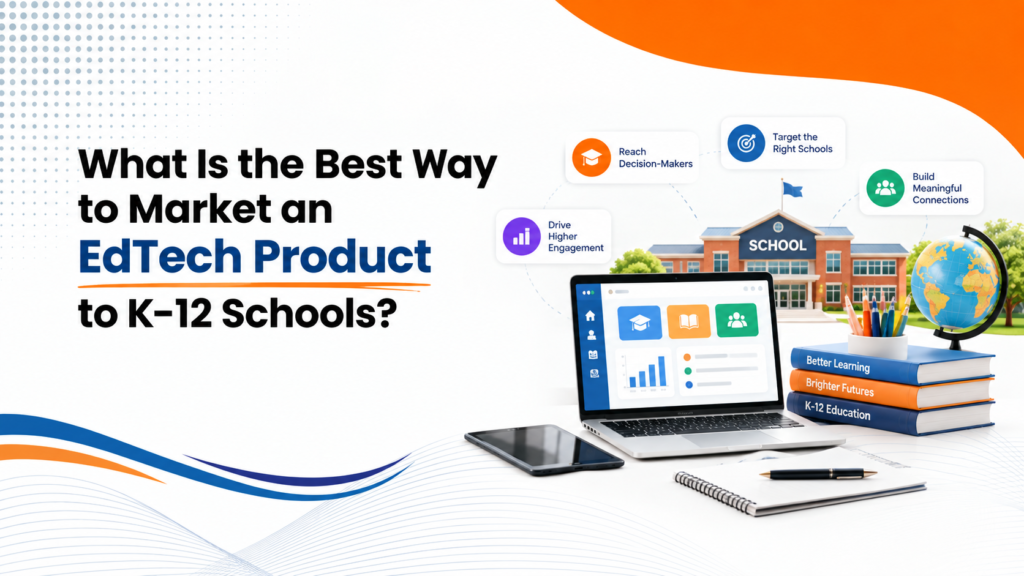

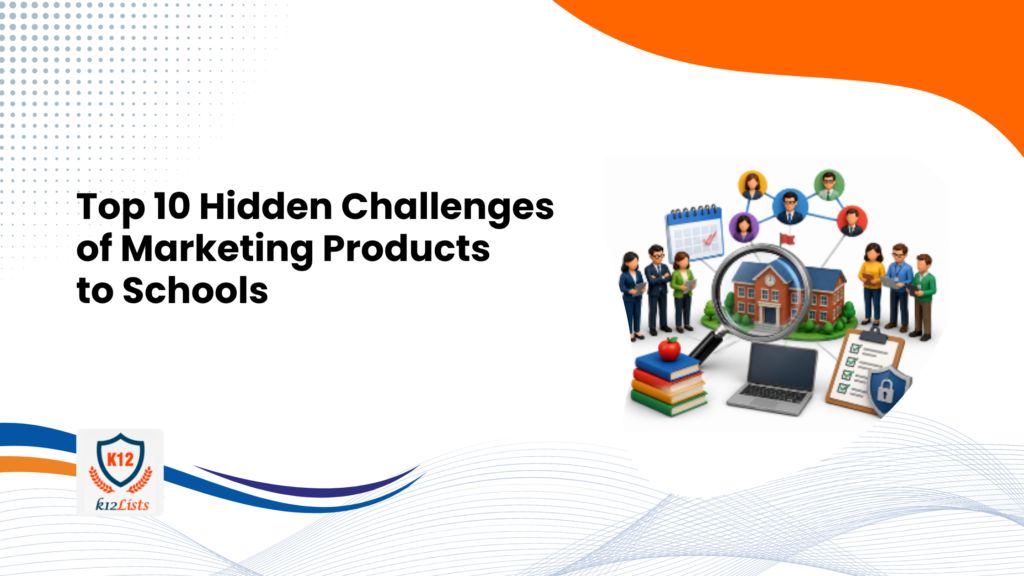
Marketing to K-12 schools looks straightforward from the outside. But businesses that have worked in education know the reality is far more complex and most campaigns fail for reasons that never appear in a brief.
Marketing products to schools may seem simple from the outside. A company creates an education-focused solution, identifies schools as potential customers, reaches out to administrators, and expects sales conversations to begin.
However, businesses that have worked in the education sector understand that the reality is much more complex. Unlike many traditional B2B markets, schools do not make purchasing decisions based only on price or product features. Every education purchase involves multiple considerations, including student outcomes, teacher adoption, budget availability, approval processes, and long-term value.
This is why marketing products to schools requires a completely different approach compared to selling to other industries. A company may have an excellent product, but reaching the right audience at the right time remains one of the biggest challenges in the K-12 market.
Marketing products to schools is challenging because education purchasing decisions involve multiple stakeholders, longer approval cycles, limited budgets, and structured procurement processes. Companies need a focused K-12 marketing strategy that considers school priorities, decision-makers, and buying behavior.
Schools are not typical buyers. When a business sells to a private company, a single executive or department leader may have the authority to make a purchase decision. In education, the process often involves several people: school administrators, teachers, district leaders, IT teams, purchasing departments, and curriculum specialists. Each group evaluates products differently.
Multiple Decision-Makers Influence School Purchases
One of the biggest challenges in selling to schools is understanding who actually influences the buying decision. Many businesses assume that reaching a principal is enough. While principals are important, education purchases often involve a wider group of stakeholders.
Whether the solution supports school goals, teacher effectiveness, student outcomes, and operational improvements.
Budget requirements, implementation challenges, district-wide impact, and long-term sustainability.
Ease of use, classroom engagement, learning outcomes, and practical day-to-day application in the classroom.
Data security, technical compatibility, system integration requirements, and ongoing support needs.
Vendor requirements, pricing structures, contract terms, and procurement policy compliance.
Companies need more than a general contact list. They need a clear understanding of school decision-makers and their specific roles.
Long Education Sales Cycles Slow Down Marketing Results
Many companies entering the K-12 market expect quick conversions. However, schools often operate according to academic calendars, budget cycles, and approval timelines. A typical education purchase may require initial product evaluation, internal discussions, budget approval, pilot programs, procurement review, and final implementation planning.
This means a sales opportunity that starts today may not become a purchase decision immediately. Successful companies understand that education sales require patience and consistent engagement.
Instead of focusing only on immediate conversions, businesses should build relationships through educational content, product demonstrations, case studies, helpful resources, and personalized communication. A strong K-12 sales strategy recognizes that trust plays a major role in education purchasing decisions.
Schools Have Limited Budgets and Strict Purchasing Priorities
Budget limitations are one of the most common challenges businesses face when selling products to schools. Schools are constantly balancing multiple priorities: student needs, teacher resources, technology investments, infrastructure improvements, and operational expenses. Even when a product provides value, schools must determine whether it fits within their available budget.
This means education vendors need to communicate value clearly. Instead of focusing only on product features, successful companies explain how the solution improves outcomes, saves time, supports teachers, and solves existing challenges.
An EdTech company selling classroom software should not only explain the technology. It should demonstrate how teachers can use it to improve classroom engagement and reduce administrative workload, the outcomes that matter to budget decision-makers.
Reaching the Right School Contacts Is Difficult
One of the biggest reasons education marketing campaigns fail is inaccurate targeting. Many companies struggle to identify the right people within schools and districts. A common mistake is assuming every education professional is a potential buyer. Different products require different audiences.
Technology directors, curriculum coordinators, school administrators
Curriculum specialists, academic coordinators, department heads
Purchasing managers, operations leaders, administrative staff
Low response rates, wasted outreach efforts, poor campaign performance, higher cost per opportunity
A successful school outreach strategy requires accurate information about school type, location, institution size, professional roles, and decision-making authority. This is where verified education contacts and targeted education databases become valuable resources.
Generic Messaging Does Not Work in Education Marketing
Schools respond better to messages that understand their specific challenges. Generic marketing campaigns often fail because they focus on product features instead of explaining how the solution helps educators, administrators, or districts achieve their goals. One of the biggest mistakes companies make when entering the education market is using the same messaging they use for other industries.
Schools are not simply looking for products. They are looking for solutions that support their educational mission.
What companies often lead with: Advanced dashboards, automated reporting, digital tools.
What school administrators actually want to hear: Improved teacher efficiency, better student learning outcomes, reduced administrative workload.
A strong campaign considers who the audience is, what challenges they face, what outcomes they want, and how the solution supports their priorities. Personalized communication helps businesses create stronger connections with school decision-makers and improve engagement.
Schools Follow Different Buying Processes
Every education organization has a different purchasing process. A private school may have a shorter decision-making process because fewer people are involved. A large public school district may require department approval, budget reviews, vendor evaluations, procurement procedures, and contract discussions.
This difference makes the education market more complex than many businesses expect. Companies need to understand factors such as school type, district structure, budget cycles, and approval requirements.
A platform that successfully reaches individual schools may struggle when expanding to districts, because district-wide purchases require entirely different conversations, longer timelines, and different decision-maker sets at the table.
Education Market Segmentation Is Often Ignored
Many companies treat the education market as one large audience. However, schools differ significantly based on institution type, geographic location, student population, budget size, technology adoption, and decision-making structure. Effective K-12 marketing depends on reaching the right schools, institutions, and professionals.
Public, private, charter, magnet schools and colleges each have distinct procurement behavior
State, region, district, or country, each layer affects budget authority and timing
Principals, superintendents, teachers, administrators, and technology directors all evaluate differently
Enrollment size, district size, and educational focus signal priority and purchasing capacity
A targeted approach helps companies improve their education lead generation efforts by focusing on audiences with higher potential rather than broadcasting to a generic “education” segment.
Outdated Contact Data Reduces Campaign Performance
Many companies invest heavily in education marketing campaigns but overlook one critical factor: data accuracy. Even a well-designed campaign can fail when contact information is outdated. Education professionals frequently change roles due to promotions, school transfers, retirements, and organizational changes.
When businesses rely on inaccurate data, they experience higher bounce rates, reduced campaign performance, and wasted marketing spend, regardless of how good the creative or messaging is.
A reliable education marketing database should include regularly updated information and relevant details such as school name, professional role, institution type, location, and contact information. Accurate data helps businesses improve outreach quality and connect with the right education professionals.
Schools Need Trust Before Making Purchasing Decisions
Unlike many consumer markets, schools rarely make purchasing decisions based only on advertising. Education organizations need confidence that a product will provide meaningful value before adopting new solutions.
- Proven results from comparable institutions or districts
- Industry credibility signals such as partnerships and awards
- Customer examples and implementation case studies
- Clear implementation support and onboarding processes
A successful marketing approach focuses on building trust through educational resources, product demonstrations, case studies, and industry insights. Companies that understand school priorities can position themselves as valuable partners instead of simply another vendor.
Measuring Education Marketing Success Is Complex
In traditional marketing, companies often focus on immediate conversions. However, education sales usually involve longer relationship-building processes. A campaign generating thousands of clicks may not be successful if it does not create meaningful conversations with school buyers.
Engagement quality, qualified conversations with decision-makers, meetings secured with principals or district admins, sales pipeline growth by school tier, and long-term partnership development, not raw click or impression volume.
Businesses should focus on quality indicators: Are the right schools being reached? Are conversations connecting with actual decision-makers? Are prospects showing genuine interest? A data-driven approach helps companies improve their K-12 marketing campaigns and make better decisions over time.
How Companies Can Improve K-12 Marketing Results
Companies can improve K-12 marketing results by understanding school buying behavior, identifying the right decision-makers, using accurate education data, and creating personalized outreach campaigns based on school needs.
Before launching campaigns, identify your target audience by school type, district size, geographic location, professional roles, and budget requirements. A clear audience profile improves targeting accuracy and campaign efficiency.
Reaching the correct contacts is one of the most important factors. Depending on the product, companies may need to connect with principals, superintendents, curriculum directors, IT leaders, or purchasing managers, not just whomever is easiest to reach.
Schools respond better to campaigns that address their real challenges. Instead of focusing only on product features, communicate educational outcomes, efficiency improvements, cost benefits, and classroom impact. Role-specific messaging improves engagement at every stakeholder level.
Accurate data is the foundation of successful school outreach. A targeted K-12 education database allows businesses to connect with relevant contacts based on institution type, location, professional role, and school characteristics, reducing wasted outreach and improving campaign efficiency.
Practical Checklist Before Launching Your Next Campaign
Review each area before deployment to improve targeting, engagement, and conversion opportunities.
Successful School Marketing Starts With Better Targeting
Marketing products to schools requires a different approach from traditional B2B marketing. The challenge is not only creating a valuable product. The real challenge is understanding how schools evaluate solutions, who influences purchasing decisions, and how to communicate value effectively.
The education market offers significant opportunities for companies that understand how schools operate. By combining the right strategy with reliable data, businesses can improve outreach, connect with relevant school professionals, and create stronger opportunities for growth.
Common Questions About Marketing Products to Schools
Direct answers to the most searched questions on this topic, optimized for featured snippet extraction.
Reach the Right Education Decision-Makers With Better Data
Successful education marketing starts with reaching the right audience. K12 Lists provides verified and segmented education databases designed to help businesses connect with school administrators, educators, and education decision-makers.
Contact K12 List today