
Marketing to schools has become more competitive than ever. In the past, education vendors relied on cold calls, print catalogs, and broad advertising to reach schools. Today, decision-makers like principals, teachers, superintendents, and district IT leaders expect personalized and relevant communication.
That is why data-driven outreach has become essential.
A verified K-12 email list helps businesses connect directly with school decision-makers using targeted messaging. Instead of sending generic emails to random school inboxes, organizations can reach the exact people responsible for evaluating educational products and services.
For example, an EdTech company launching a new learning platform can send personalized campaigns to elementary teachers, district curriculum directors, and high school principals separately. This targeted approach improves engagement, increases response rates, and creates better sales opportunities.
In today’s AI-driven marketing environment, accurate K-12 data is the foundation for effective outreach, automation, and personalization.
What Are K-12 Email Lists?
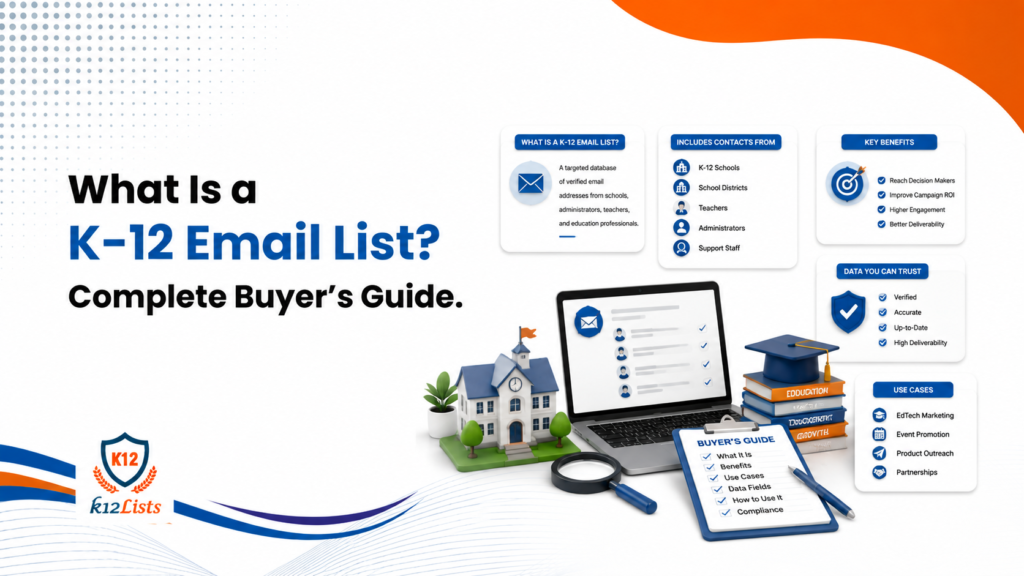
A K-12 email list is a verified database of educators and school administrators working in kindergarten through 12th-grade education.
These databases typically include:
- Full names
- Verified school email addresses
- Job titles
- School and district names
- Phone numbers
- Mailing addresses
- Geographic details
- Grade levels or subject specialties
A professional K-12 schools email list allows businesses to target specific audiences such as:
- Principals
- Superintendents
- Teachers
- IT directors
- Curriculum coordinators
- Counselors
- District administrators
Unlike random or scraped email databases, verified K-12 lists are built from trusted sources including:
- State education directories
- School district websites
- Professional associations
- Conference registrations
- Public education records
- Opt-in databases
Reliable providers also verify contacts regularly using AI validation tools and manual review processes to maintain accuracy.
Why K-12 Data Matters in Education Marketing
Modern education marketing depends on precision.
Schools receive countless emails every day, making generic outreach ineffective. Verified K-12 data helps organizations improve:
- Campaign targeting
- Deliverability
- Personalization
- Lead quality
- Marketing ROI
For example, a cybersecurity company selling solutions for school districts can target district IT directors instead of sending broad campaigns to every teacher.
Similarly, curriculum publishers can segment audiences by subject area, school level, or district size to create more relevant messaging.
Accurate K-12 data also powers marketing automation tools like HubSpot, Salesforce, and Mailchimp. With the right database, businesses can automate personalized follow-ups, webinar invitations, and lead nurturing campaigns.
Who Uses K-12 Email Lists?
Many industries rely on K-12 contact databases to reach education professionals.
EdTech Companies
EdTech firms use K-12 email lists to promote:
- Learning management systems
- AI tutoring platforms
- Assessment tools
- Classroom software
- Student engagement apps
Educational Publishers
Curriculum providers and publishers connect with teachers and department heads to promote digital textbooks and educational resources.
School Supply and Furniture Vendors
These companies target procurement officers and operations managers responsible for school purchasing.
SaaS and Technology Providers
Technology vendors promoting cybersecurity, communication tools, and cloud solutions often focus on district IT leaders and administrators.
Professional Development Providers
Organizations offering teacher training, certifications, and workshops use K-12 data to promote programs directly to educators.
Agencies and Startups
Marketing agencies and startups entering the education market use K-12 lists to build awareness and generate leads quickly.
How K-12 Email Lists Work
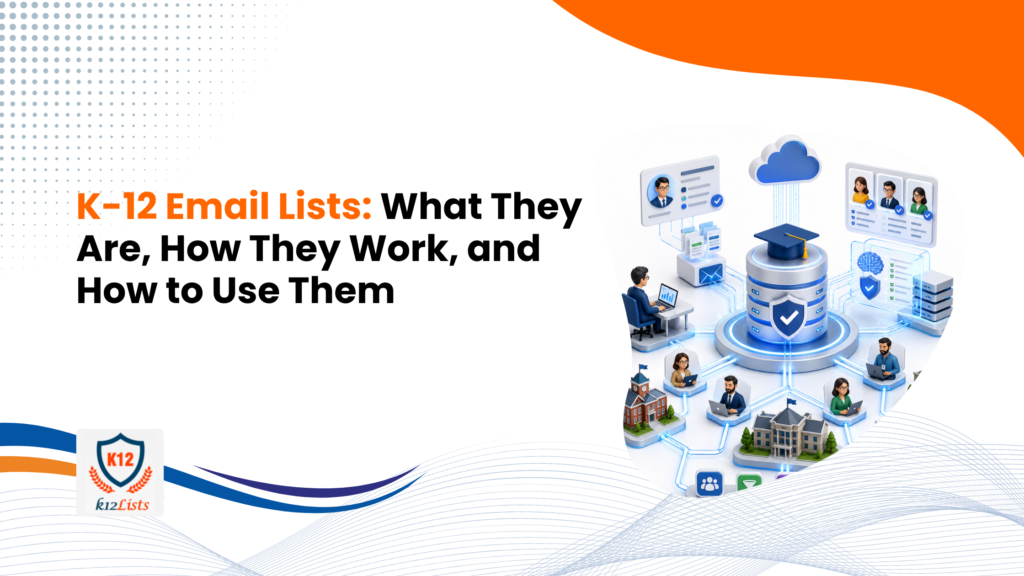
Professional K-12 databases are built through a detailed process involving data collection, verification, segmentation, and ongoing updates.
Data Collection
Providers gather information from trusted education sources such as:
- State education databases
- School websites
- Public district records
- Education associations
- Conference attendee lists
Verification
To maintain accuracy, providers use:
- SMTP verification
- AI-powered validation
- Manual checks
- Bounce removal systems
This process helps ensure emails are active and deliverable.
Segmentation
A strong K-12 database allows filtering by:
- State or region
- School type
- Enrollment size
- Grade level
- Subject area
- Job title
For example, businesses can target only middle school STEM teachers in California or district superintendents in Texas.
Continuous Updates
School staffing changes frequently, so reliable providers refresh their databases every 30 to 90 days to maintain accuracy.
What Information Is Included in a K-12 Database?
A professional K-12 email database contains more than just email addresses.
Typical data fields include:
- First and last name
- Verified email address
- Job title
- Department
- School name
- District name
- City and state
- Phone number
- Mailing address
- Grade levels served
Some advanced databases may also include subject specialties, technology usage, or enrollment details.
Benefits of Using Verified K-12 Email Lists
Precision Targeting
Verified K-12 data allows businesses to reach highly specific audiences such as:
- Charter school principals
- District IT leaders
- STEM teachers
- Private school administrators
This improves campaign relevance and engagement.
Better Deliverability
Verified email addresses reduce bounce rates and improve inbox placement.
Higher Engagement Rates
Personalized campaigns perform better because the content is relevant to the recipient’s role and responsibilities.
Time and Cost Savings
Building school contact lists manually takes significant time and resources. Purchasing verified K-12 data accelerates outreach and lead generation.
Compliance and Trust
Professional providers follow:
- CAN-SPAM regulations
- GDPR guidelines
- CCPA compliance standards
This helps organizations run campaigns ethically and legally.
Improved ROI
Targeted outreach helps businesses generate higher-quality leads while reducing wasted marketing spend.
Common Use Cases for K-12 Data
Businesses use K-12 email lists in many ways, including:
Email Marketing Campaigns
Organizations send:
- Product announcements
- Educational resources
- Industry insights
- Promotional offers
Webinar Invitations
Companies invite teachers, principals, and district leaders to virtual events and professional development sessions.
Product Launches
EdTech and SaaS companies use K-12 data to introduce new tools and solutions directly to decision-makers.
Account-Based Marketing (ABM)
Education-focused ABM campaigns target specific school districts and multiple stakeholders within those accounts.
Lead Nurturing
Businesses use automated email sequences to share:
- Case studies
- Whitepapers
- Demo invitations
- Educational content
Market Expansion
Companies entering new states or regions use K-12 data to build awareness quickly.
How to Use K-12 Email Lists Effectively
Segment Your Audience
Segment contacts based on:
- Job role
- Region
- School level
- Subject area
- School type
Tailored messaging improves engagement and response rates.
Personalize Your Campaigns
Use recipient names, school details, and role-specific messaging whenever possible.
For example:
“Helping Texas Schools Improve STEM Learning”
is more effective than:
“Check Out Our New Product.”
Use Marketing Automation
Integrate K-12 data with CRM and email marketing platforms to automate:
- Follow-ups
- Webinar reminders
- Drip campaigns
- Lead nurturing
Monitor Campaign Performance
Track metrics such as:
- Open rates
- Click-through rates
- Bounce rates
- Replies
- Conversions
Use A/B testing to improve subject lines and email copy.
Focus on Educational Value
Schools respond better to messaging focused on:
- Student outcomes
- Classroom efficiency
- Teacher support
- Administrative improvements
Avoid overly aggressive sales language.
K-12 Email Marketing Best Practices
Provide Value
Every email should offer something useful, such as:
- Free resources
- Webinar access
- Research reports
- Industry insights
Write Strong Subject Lines
Examples include:
- “Improve Student Engagement with AI Tools”
- “Free STEM Resource Guide for Teachers”
- “Strategies to Reduce School Administrative Workload”
Build Multi-Step Campaigns
Educators are busy, so multiple touchpoints are often needed before generating responses.
Maintain Clean Data
Regularly remove inactive contacts and refresh your database to maintain deliverability.
Stay Compliant
Always include unsubscribe options and follow ethical email practices.
Challenges Without Quality K-12 Data
Using outdated or inaccurate school contacts can lead to:
- Low engagement rates
- High bounce rates
- Poor targeting
- Longer sales cycles
- Wasted marketing budgets
Reliable K-12 data solves these problems by improving targeting and campaign efficiency.
How K12-Lists Helps Businesses Reach School Decision-Makers
At K12-Lists, we provide verified and highly targeted K-12 contact databases designed for education marketing.
Verified and Updated Data
Our records are regularly refreshed to maintain strong deliverability.
Advanced Segmentation
We help businesses filter audiences by:
- State
- District
- Job title
- School type
- Enrollment size
- Grade level
Customized Lists
We build tailored K-12 databases based on your campaign goals and target audience.
Compliance-Focused Data
Our databases follow CAN-SPAM, GDPR, and CCPA standards.
Dedicated Support
Our team assists with audience selection, segmentation, and campaign planning.
What to Look for in a K-12 Email List Provider
When choosing a K-12 data provider, focus on:
- High data accuracy
- Frequent updates
- Detailed segmentation
- Compliance standards
- Customization options
- Transparent support
The best providers treat their K-12 data as a continuously updated product rather than a static list.
Frequently Asked Questions (FAQs)
A K-12 email list is a verified database of educators and school administrators used for targeted outreach.
Yes. Reputable providers follow CAN-SPAM, GDPR, and CCPA regulations.
Who benefits from K-12 data?
EdTech companies, publishers, software vendors, training providers, agencies, and school suppliers all benefit from targeted K-12 databases.
How accurate should a K-12 email list be?
Professional providers typically maintain 95% to 98% accuracy through regular verification.
Can I target principals and superintendents separately?
Yes. Most providers allow filtering by job title and department.
How often should K-12 databases be updated?
Reliable providers refresh records every 30 to 90 days.
Conclusion
Modern education marketing depends on accurate and targeted outreach. Businesses that invest in verified K-12 email lists can connect directly with principals, teachers, superintendents, and district leaders using personalized messaging.
With the right K-12 data, organizations can:
- Improve campaign performance
- Increase lead quality
- Boost engagement
- Reduce wasted marketing spend
- Generate better ROI
As AI and automation continue to shape education marketing, reliable K-12 data will become even more valuable.
Looking to connect with school administrators, principals, teachers, and education decision-makers?
Contact us today for customized K-12 email lists built for targeted outreach and measurable marketing results.