
Reaching the right audience in the education sector is never a matter of chance-it’s about precision. Verified K-12 data provides that precision, giving businesses direct access to the decision-makers who matter most: principals, superintendents, and IT directors. When your marketing efforts are built on accurate, up-to-date information, every message lands where it should, engagement improves, and campaigns generate meaningful results. In the competitive world of B2B education marketing, quality data isn’t just an advantage-it’s the key to success.
Why K-12 Data Quality is Key
More leads don’t always mean better results-here’s why verified K-12 data beats large unverified lists every time.
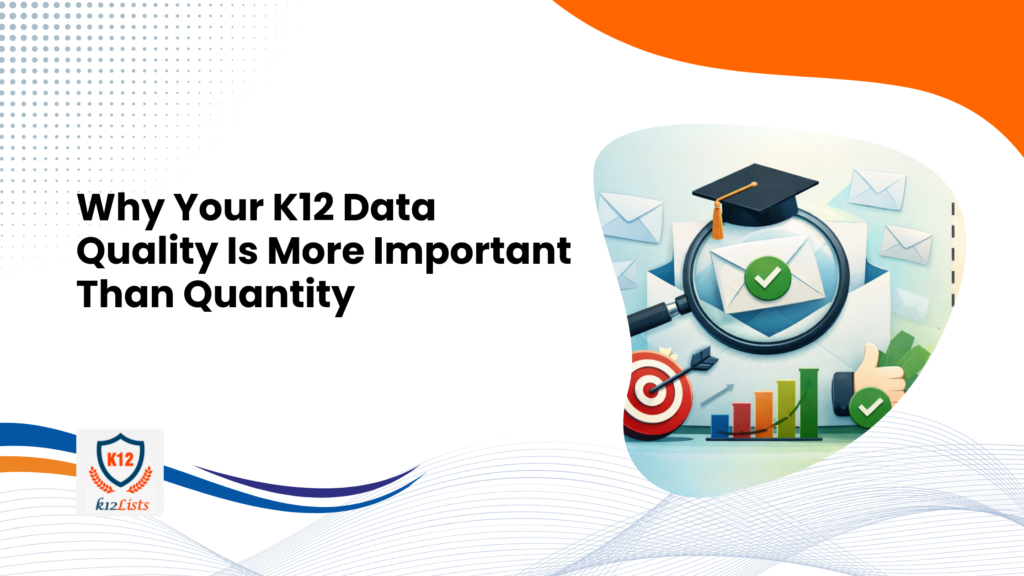
In the competitive world of education technology and services, B2B marketers often fall into a common trap: the belief that “more is better.” It is easy to assume that a database with 100,000 generic contacts will yield more sales than a list of 10,000 highly targeted prospects. However, in the nuanced education sector, accurate targeting is the only metric that truly matters.
K-12 data in a B2B marketing context refers to the specific intelligence required to sell products or services to schools and districts. This includes more than just email addresses; it encompasses district demographics, technology budgets, Title I status, and specific job roles.
When a k12 schools email list is compiled with strategic intent, it transforms from a simple spreadsheet into a revenue-generating asset. Conversely, relying on bulk, scraped, or outdated b2b data often results in domain blacklisting and wasted marketing spend. This guide explores why prioritizing quality over quantity is the definitive strategy for modern EdTech marketing.
What Is High-Quality K-12 Data?
High-quality K-12 data is accurate, up-to-date, and compliant information about schools, districts, and the people who make decisions within them. It goes beyond basic email lists and typically includes:
- Verified contact details (emails, phone numbers, addresses) with low bounce risk
- Clear decision-maker roles (e.g., Superintendent, Principal, Curriculum Director, IT Director)
- Role-based segmentation so you can target by job function, department, and seniority
- Contextual school attributes such as school type (public/private/charter), size, grade levels, funding status, and technology environment
- Compliance and consent aligned with CAN-SPAM, GDPR, and other regulations
In short, high-quality K-12 data is reliable, richly segmented, and legally sound, making it suitable for precise, effective B2B marketing and sales outreach in the education sector.
The Cost of Quantity-Over-Quality Lists
There is a hidden tax on “cheap” data. While buying a massive list of unverified contacts might look good on a balance sheet initially, the downstream costs can cripple a marketing campaign.
Skyrocketing Bounce Rates and Spam Complaints
When you utilize a bulk b2b email list that hasn’t been scrubbed, you risk hitting “spam traps” or emailing defunct addresses. Internet Service Providers (ISPs) monitor these bounce rates closely. If your bounce rate exceeds 2-3%, your sender reputation takes a hit, meaning even your good emails start going to the spam folder.
Wasted Budget and Resources
Marketing automation platforms often charge based on the number of contacts in your database. Holding 50,000 invalid records means you are paying monthly fees for data that will never convert. Furthermore, your sales development reps (SDRs) waste valuable hours calling wrong numbers or emailing people who left the district three years ago.
Poor Engagement and Reduced ROI
Unverified b2b data leads to “spray and pray” tactics. Because the data lacks segmentation (e.g., knowing who is a decision-maker), the messaging becomes generic. Generic messaging in the education sector is ignored. This results in abysmal open rates, low click-through rates (CTR), and a significantly reduced Return on Investment (ROI).
Misalignment with Sales Pipelines
Sales teams need qualified leads (MQLs and SQLs). When marketing feeds the sales team a high volume of low-quality leads derived from bad data, friction occurs. Sales teams lose trust in marketing’s ability to deliver, causing a breakdown in the revenue pipeline.
How Verified K-12 Data Improves Targeting and ROI
Verified K‑12 data ensures your campaigns reach real decision‑makers like principals, superintendents or IT Directors. Rather than generic or outdated contacts. With accurate segmentation by role, district, and school type, you can tailor messaging to each audience, boosting open and response rates. Better targeting means more qualified leads, higher conversion rates, and a lower cost‑per‑lead, directly improving overall ROI from your B2B email campaigns.
How does verified K-12 data boost B2B campaign results?
Verified K-12 data boosts B2B campaign results by enabling hyper-segmentation, ensuring messages reach the specific administrators with purchasing power, and protecting sender reputation for higher deliverability.
Here is how high-quality data directly impacts the bottom line:
Accurate Targeting Increases Open and Reply Rates
When you know a contact is specifically the “Director of Instructional Technology” rather than just “IT Staff,” you can tailor your subject line to address their specific pain points. Verified K12 data allows for this level of precision. Personalized emails generate up to 6x higher transaction rates. In the education sector, where administrators are inundated with emails, relevance is the only way to stand out.
Segmentation Enables Personalized Outreach
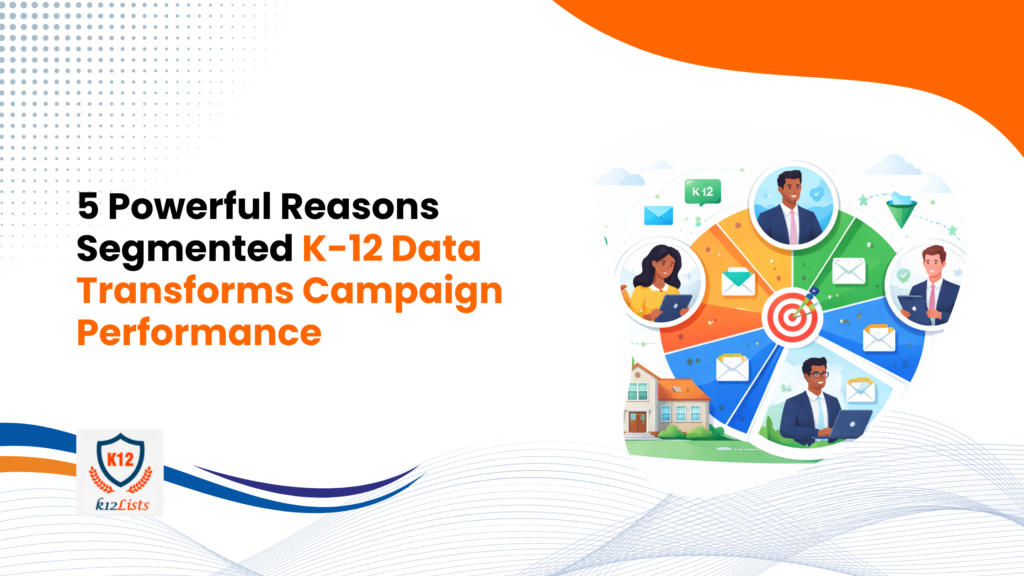
A verified b2b email list allows you to segment by:
- Geography: Targeting districts in states with new funding mandates.
- School Type: Differentiating between private, public, and charter schools.
- Title: sending different value propositions to a Superintendent (strategy focus) vs. a Teacher (classroom focus).
Better Data = Lower Cost-Per-Lead (CPL)
While verified data may cost more upfront per record, the Cost-Per-Lead helps tell the true story. Because conversion rates are higher on verified lists, the actual cost to acquire a customer drops significantly. You spend less effort to close more deals.
Why Data Freshness Matters for Education Marketing
The education sector has one of the highest turnover rates of any industry. This phenomenon is often referred to as “The Summer Churn.” Between June and August, principals retire, superintendents move districts, and teachers change roles.
The Impact on the K12 Schools Email List
If your k12 schools email list is not updated frequently (ideally every 90 days), it decays rapidly. Industry estimates suggest B2B data decays at a rate of 22.5% to 30% per year. In K-12 education, this can be even higher following the end of a school year.
Fresh Data Supports Long-Term Lead Nurturing
B2B sales cycles in education are long, often 6 to 18 months. You need b2b data that remains accurate throughout this entire lifecycle.
- ABM Campaigns: Account-Based Marketing relies on mapping the stakeholders in a specific district. If your data is stale, you might be nurturing a contact who no longer works there, breaking the chain of influence required to close the deal.
- Avoiding the “Hard Bounce”: Nothing kills a nurturing sequence faster than a hard bounce mid-campaign. Fresh data ensures your drip campaigns continue uninterrupted.
Real-World Benefits of High-Quality K-12 Data
When stakeholders ask, “What are the benefits of using verified K-12 data?”, the answer lies in measurable performance improvements across the marketing funnel.
Here are the primary benefits organizations realize when switching from bulk lists to verified data:
- Improved Targeting Precision: You stop wasting ad spend on irrelevant audiences. You can target by district size, budget, or technology usage.
- Higher Engagement Rates: Verified emails land in the primary inbox, not the spam folder. Combined with relevant job titles, this leads to open rates that often exceed industry averages.
- Predictable and Measurable ROI: With clean data, attribution becomes easier. You can accurately track which segments are converting and forecast revenue with greater confidence.
- Enhanced Sales and Marketing Alignment: When marketing provides sales with accurate contact info for real decision-makers, the handoff is smooth, and morale improves.
- Regulatory Compliance: Using verified, compliant data protects your brand from legal risks associated with GDPR, CCPA, and CAN-SPAM violations.
How K12-Lists Makes K-12 Data Work for You
At K12-Lists, we understand that data is the fuel for your marketing engine. We do not believe in static, stagnant databases. Our approach is designed to help you bypass gatekeepers and connect directly with the people shaping the future of education.
Key Features of Our Data Services:
- Access to Verified, Regularly Updated K-12 Data: We employ rigorous verification processes to ensure our email lists are current, minimizing bounce rates and maximizing deliverability.
- Deep Segmentation: Our k12 schools email list can be sliced and diced by role (Superintendents, Principals, IT Directors), location (City, State, Zip), school type (Public, Private, Charter), and enrollment size.
- Support for Multi-Channel Campaigns: Whether you are running email marketing, direct mail, or telemarketing campaigns, our data supports your strategy.
- ABM Readiness: Our data is structured to support Account-Based Marketing, giving you a holistic view of the decision-making unit within a district.
- B2B Demand Generation: We help you fill your pipeline with high-intent prospects, reducing the time your sales team spends prospecting.
By choosing K12-Lists.com, you aren’t just buying a b2b email list; you are investing in market intelligence that empowers your team to close more deals.
Use Cases: Who Benefits from Verified K-12 Data?
Verified K-12 data is a versatile asset used by a variety of B2B organizations. Here is how different sectors leverage this data for growth:
EdTech Companies
Startups and established software providers use K12 data to pitch Learning Management Systems (LMS), assessment tools, and classroom apps. They need to reach Chief Technology Officers (CTOs) and Curriculum Directors to secure district-wide licenses.
Educational Publishers
Textbook and digital content publishers utilize k12 schools email lists to reach Department Heads and Subject Coordinators. They use segmentation to ensure math solutions are pitched to math leaders, not English teachers.
Furniture and Equipment Suppliers
Companies selling desks, interactive whiteboards, or playground equipment need to reach Facilities Directors and Principals. Verified data allows them to time their outreach around budget approval seasons.
SaaS Platforms for Administration
Platforms offering HR, payroll, or bus routing software target District Superintendents and Business Managers. High-quality b2b data is crucial here, as these are high-value, high-stakes sales cycles.
Consultants and Service Providers
Professional development trainers and educational consultants use this data to find districts that have received specific grants or funding, offering services that align with district goals.
Conclusion
In the high-stakes world of education sales, the quality of your data dictates the quality of your results. While it may be tempting to purchase massive, inexpensive lists, the reality is that unverified data is a liability that damages your sender’s reputation and wastes your team’s time.
Verified K-12 data offers a clear path to success: precise targeting, higher engagement, and a measurable return on investment. By focusing on a clean, segmented k12 schools email list, you align your marketing efforts with the needs of the educators you serve.
Ready to transform your B2B outreach?
Don’t let bad data hold your campaigns back. Contact us today to get access to verified, high-quality K-12 data and start reaching the right decision-makers efficiently. Let’s build a pipeline that converts.
FAQ
K-12 data refers to contact information and demographic intelligence regarding schools, school districts, and educational staff. It is important for B2B marketing because it allows companies to target specific decision-makers (like Principals or Superintendents) rather than using generic outreach, resulting in higher conversion rates and efficient budget use.
Verified K-12 data improves ROI by ensuring high email deliverability and accurate targeting. By eliminating invalid emails, marketers avoid wasted spend. Furthermore, accurate job role data allows for personalized messaging, which increases engagement and conversion rates, lowering the overall cost per lead.
Yes, a high-quality k12 email list significantly increases engagement rates. When a list is segmented by job role and school type, marketers can send highly relevant content that resonates with the recipient’s specific needs. This relevance boosts open rates and reply rates compared to non-segmented, bulk lists.
K-12 data should be updated at least every 90 days, with a major refresh occurring every summer. The education sector experiences high staff turnover (up to 25% annually). Regular updates ensure that b2b data remains accurate, preventing hard bounces and ensuring campaigns reach current officeholders.