
Introduction: The Power of K12 Data
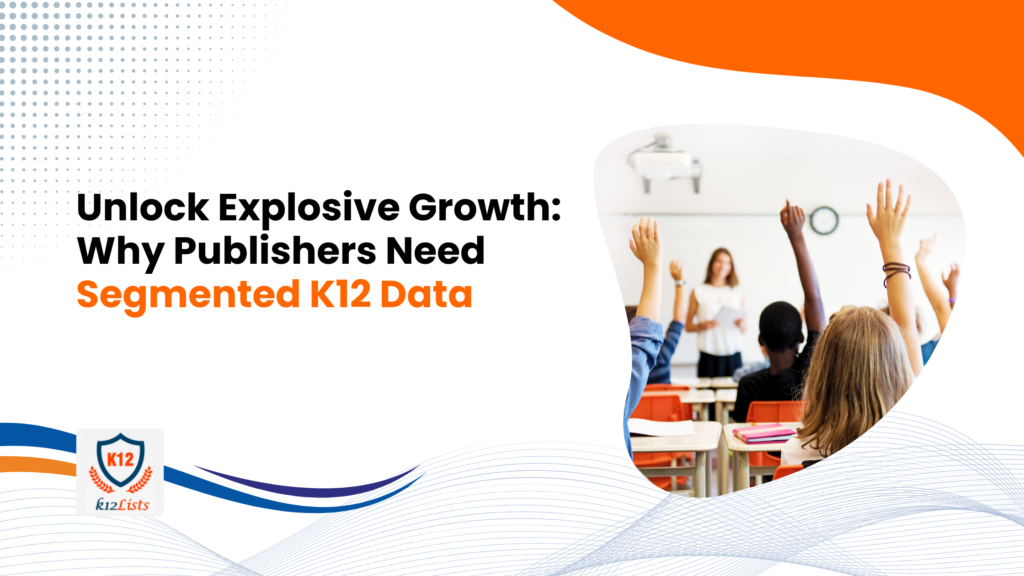
Publishers with valuable educational resources often struggle to reach the right decision-makers. Segmented K12 data ensures your product gets in front of the right audience, Such as principals and curriculum directors, leading to personalized outreach, higher engagement, and significant growth.
In today’s crowded educational landscape, leveraging K-12 Data isn’t just a competitive advantage; it’s a survival skill. Publishers are competing for the attention of busy administrators and overwhelmed teachers. To thrive, you need to cut through the noise.
But why is this specific data so critical for your publishing business? Simple: You can’t build a relationship if you don’t know who you’re talking to. To truly unlock growth, we have to move past the old “spray and pray” method and embrace Segmented K-12 Data. With the right insights-like those found in verified K12 Lists and a targeted K12 Schools Email List-you can stop guessing and start connecting.
What is K12 Data?
At its simplest level, K-12 Data is the “who, what, and where” of the education world. It includes information about schools, districts, the administrators running the show, and the educators in the classrooms.
But for us in the industry, K-12 Data for Publishers is more than just a spreadsheet of names. It’s market intelligence. It’s the roadmap for successful K-12 Education Marketing.
High-quality data tells you a story. It tells you about school demographics, funding situations, and specific roles. However, the key word here is quality. Data needs to be verified, segmented, and actionable. When you have a clean K-12 Schools Email List, you aren’t just sending emails; you’re starting conversations with the right people.
Key Characteristics of High-Quality K‑12 Data
For publishers, strong K‑12 marketing starts with strong data. The best K‑12 data and any K‑12 schools email list built from it-shares three core traits: it’s verified, segmented, and actionable.
- Verified:
Roles, school details, and email addresses are regularly updated and validated. This reduces bounces, protects sender reputation, and ensures campaigns reach real educators and decision-makers. - Segmented:
Contacts are organized by role (superintendent, principal, teacher, curriculum director), grade level (elementary, middle, high), school type (public, private, charter), subject area, and other key attributes. This lets publishers match each message to the right audience instead of sending generic blasts. - Actionable:
Data is clean, standardized, and easy to import into CRMs and email platforms. Publishers can quickly build precise lists-such as “middle school math coordinators in Title I schools” or “high school principals in Texas”-and launch targeted campaigns that are relevant, measurable, and scalable.
When K‑12 data meets these three standards, it stops being “just a list” and becomes a reliable engine for precise targeting and higher ROI in the education market.
The Importance of Data Segmentation in K-12 Publishing
What is Data Segmentation?
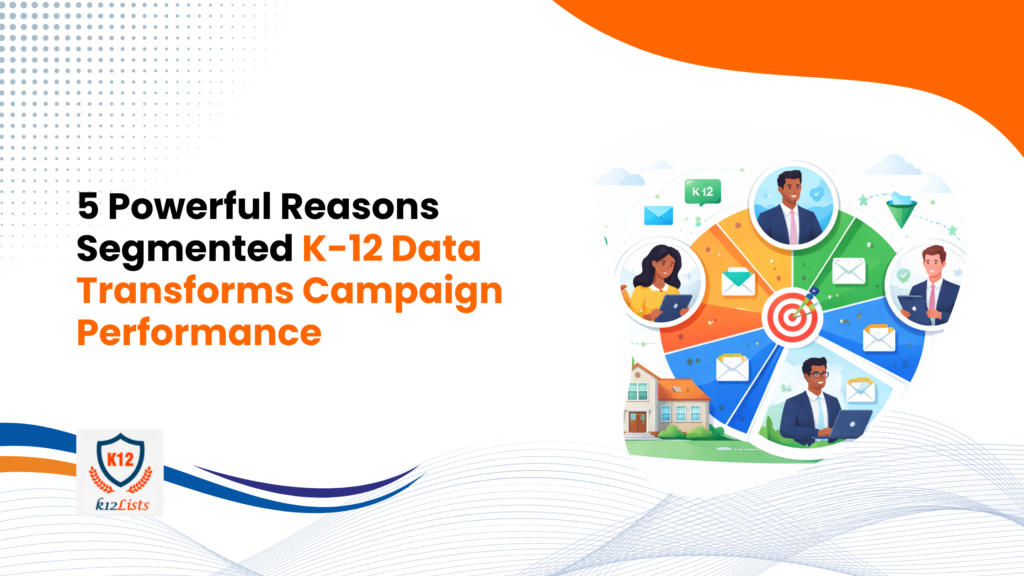
Think of segmentation as the difference between a megaphone and a phone call. Segmentation is the process of breaking your massive database into smaller, specific groups based on shared traits.
Why It Matters
Let’s be honest: A Kindergarten art teacher does not need to see a pitch for AP Calculus software. When publishers send generic blasts to everyone, they annoy their audience. Segmented K-12 Data allows you to tailor your message so it actually resonates.
By using a segmented K-12 Email List, you ensure that the Superintendent gets the budget proposal, and the Science Head gets the lab equipment specs. It’s about respect-respecting their time and their specific needs.
Real-World Examples
- Grade Level: You wouldn’t market “Learning to Read” books to a high school.
- Subject Matter: Sending STEM materials specifically to Science Coordinators.
- Geography: Targeting districts in states that just passed new curriculum funding.
How K-12 Data Fuels Explosive Growth
Better Targeting = Better Conversations
When you use a targeted K-12 Schools Email List, your engagement rates go up. Why? Because the recipient opens the email and thinks, “This is actually for me.” K-12 Data helps you find the humans behind the titles, making your outreach feel personal rather than robotic.
Campaigns That Actually Work
Segmented K-12 Data takes the guesswork out of your campaigns. You can design marketing that solves a specific problem for a specific group. This relevance is what turns a “delete” into a “click.”
ROI You Can See
We all have budgets to manage. Broad, untargeted campaigns burn through cash fast with little to show for it. By using K-12 Data for Publishers to focus only on high-potential leads, you stop wasting money on dead ends and start seeing a real return on investment.
The Benefits of Using K-12 Data for Publishers
Reaching the Decision Makers
The education buying cycle is complex. It involves layers of approval. Accurate data helps you navigate that maze, connecting you with the influencers and the check-signers.
Making Every Dollar Count
With Segmented K-12 Data, your marketing budget works smarter, not harder. You aren’t paying to send emails to people who will never buy your product. You are investing in viable prospects.
Data-Driven Decisions
K-12 Education Marketing shouldn’t be based on a hunch. Reliable data gives you the facts you need to align your content and products with what schools are actually asking for.
Building for the Long Haul
This isn’t just about a quick sale. It’s about building a foundation. When you consistently reach the right people with the right content, you build trust. That trust leads to long-term growth and repeat business.
How to Leverage K-12 Data for Publisher Growth
Build a Strategy, Not Just a List
Start by asking: Who is my perfect customer? Once you know that, use resources like a K-12 Schools Email List to find them.
Best Practices
- Be Personal: Use the data to address them by name and reference their specific school or district.
- Keep it Clean: Teachers move, and administrators retire. Data decays. Make sure your K-12 Email List is regularly updated so you aren’t chasing ghosts.
- Go Deep: Don’t just stop at “Principal.” Look for “Principals in Title I schools with high technology budgets.”
Integrate Everything
Don’t let your data sit in a silo. Weave Segmented K-12 Data into your newsletters, your sales calls, and your content strategy.
How K12 Lists Can Help
The Heavy Lifting is Done for You
Let’s face it-building these lists yourself is a nightmare. That’s where K12 Lists comes in. They offer verified, deeply segmented K-12 Schools Email Lists so you can skip the research and go straight to the outreach.
Custom Solutions
Every publisher is different. K12 Lists understands that. They provide K-12 Data for Publishers that is custom-tailored to your niche, ensuring you get exactly the contacts you need to grow.
Real Impact
Publishers who switch from generic lists to the segmented data provided by K12 Lists see the difference almost immediately. Higher open rates, warmer leads, and more sales.
If you’re ready to stop shouting into the void and start connecting, it’s time to see what K12 Lists can do for you.
Why Segmented K-12 Data is the Key to Success
To wrap this up: Generic marketing is a thing of the past. If you want explosive growth, you need the precision of Segmented K-12 Data.
It gives you a competitive edge. While your competitors are blasting out generic spam, you’ll be building genuine relationships with the educators who actually need your solutions.
Conclusion: Unlock Your Growth with K-12 Data
The education market is evolving, and publishers need to evolve with it. Success today requires accuracy, empathy, and relevance. By focusing on Segmented K-12 Data, you aren’t just selling a product; you are solving a problem for a teacher or administrator.
Ready to fuel your long-term growth? Explore K12 Lists today to get started with high-quality, verified K-12 schools email data. Stop guessing, and start growing.
Frequently Asked Questions: How Segmented K-12 Data Drives Publisher Growth
Segmented K-12 data helps publishers target their marketing efforts with precision, resulting in more effective campaigns, higher engagement rates, and ultimately, better sales outcomes.
By using a segmented K-12 email list, publishers can target specific roles such as superintendents, principals, or subject-specific coordinators, allowing them to craft relevant messaging that resonates with each group.
By segmenting data based on grade level, subject area, and role, publishers can send highly targeted messages to the right people, which increases the likelihood of a positive response and builds a stronger relationship with each contact.
Segmented K-12 Data is a targeted list of contacts based on specific traits like role, grade level, and location. It helps publishers reach the right decision-makers, ensuring more relevant and effective marketing.
By targeting the most relevant contacts, such as principals and curriculum directors, segmented K-12 email lists lead to more personalized campaigns, higher engagement, and improved ROI.
Regularly clean and update your list using verified services like K12 Lists to ensure it remains relevant, avoiding outdated or incorrect information.