
Marketing to K–12 decision-makers can feel like shouting into a crowded room while everyone is checking their calendars, juggling budgets, and trying to solve ten urgent problems before lunch.
One email goes to a superintendent who cares about district-wide impact.
Another lands in the inbox of a principal focused on staffing and student outcomes.
A third reaches an IT director worried about security, integration, and whether a new solution will create more headaches than it solves.
Same campaign. Completely different priorities.
And that’s exactly why so many K–12 marketing campaigns underperform.
The problem usually isn’t the product.
It isn’t even the offer.
It’s the targeting.
When your message is too broad, it feels generic. When it feels generic, people ignore it. And when people ignore it, your campaign turns into another report full of disappointing numbers.
But there’s good news.
Segmented K12 data can change all of that.
It helps you stop marketing to “everyone in education” and start speaking directly to the people most likely to care, respond, and act. And when that happens, your marketing starts working the way you always hoped it would.
What is Segmented K12 Data?
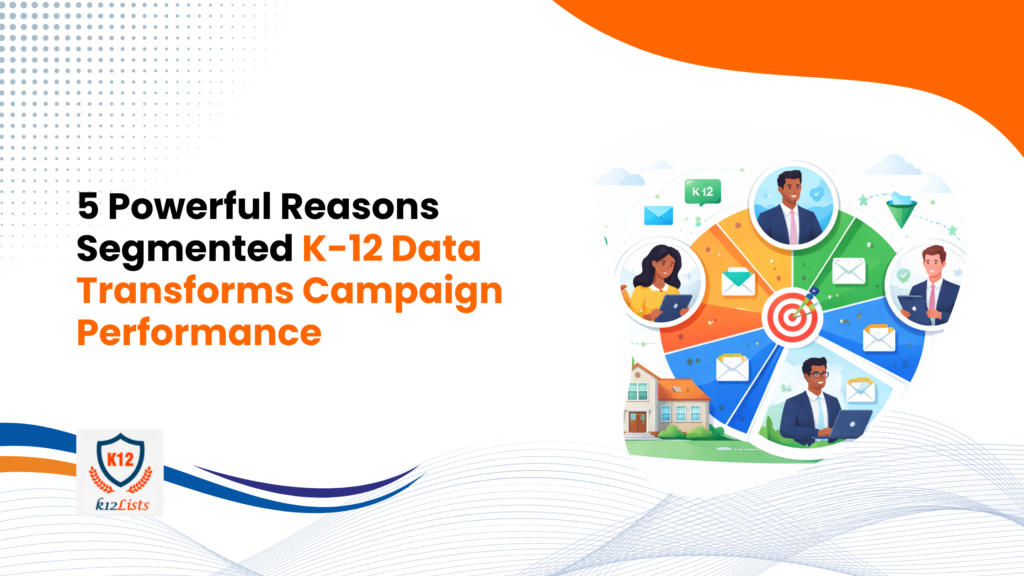
Segmented K12 data is exactly what it sounds like: education contact data organized into meaningful groups so you can target the right people with the right message.
Instead of using one giant list and hoping something sticks, you separate contacts based on factors like:
- District
- Grade level
- Public, private, or charter school type
- Geographic region
- Job title
- School size
- Department or area of responsibility
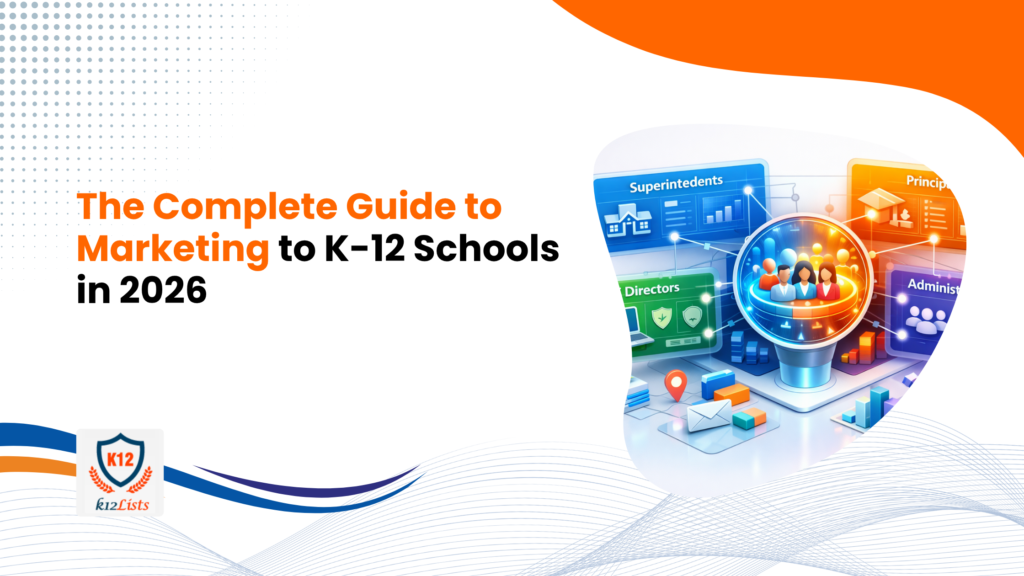
That might mean creating one segment for public school superintendents in Texas, another for private school principals in the Northeast, and another for district technology leaders in large suburban systems.
Why does this matter?
Because not all K–12 audiences think the same way.
An elementary curriculum director does not need the same message as a high school athletic administrator. A private school head is not evaluating vendors the same way as a purchasing officer in a public district. If you talk to both with the same language, you lose both.
Segmentation fixes that.
It gives you the power to make your campaigns more focused, more relevant, and far more persuasive.
Benefits of targeting specific segments
Here’s what happens when you stop blasting and start segmenting:
- Your emails feel more personal
- Your messaging becomes more relevant
- Your audience is more likely to engage
- Your list performs better
- Your team spends less time chasing the wrong leads
Most importantly, you stop wasting effort on people who were never a fit in the first place.
And in marketing, that’s not a small win.
That’s everything.
Why Segmentation Improves Campaign Results
Relevance is the secret behind every successful campaign.
Not clever copy.
Not pretty design.
Not even a great offer.
Relevance.
When people feel like your message understands their world, they pay attention. When they feel like it was written for someone else, they move on.
That’s why segmented K12 data can have such a dramatic impact on campaign performance.
Higher open rates and engagement
Think about your own inbox.
Which email are you more likely to open?
The one with a vague subject line sent to thousands of people?
Or the one that speaks directly to a challenge you’re dealing with right now?
K–12 decision-makers are no different.
When an email reflects their role, school type, or specific priorities, it stands out.
For example:
- A district technology leader might respond to messaging about cybersecurity, device management, or systems integration
- A principal may care more about implementation, staff adoption, and student outcomes
- A private school administrator may be more interested in flexibility, personalization, and parent communication
When the message fits the audience, engagement rises naturally.
Not because you tricked them into opening the email.
Because you made it relevant enough to deserve their attention.
Reduced bounce and irrelevant outreach
There’s another benefit that often gets overlooked.
Segmented data helps you clean up your outreach.
Instead of sending to broad, outdated, or mismatched lists, you’re working from data that is more intentional and better organized. That means:
- Fewer bounced emails
- Fewer unsubscribes
- Fewer spam complaints
- Better deliverability
- A stronger sender reputation
And once your sender reputation improves, your future campaigns benefit too.
It’s a compounding advantage.
Better leads, better conversations
Here’s where it gets even more powerful.
Segmentation doesn’t just improve email metrics. It improves the quality of the response.
When the right people receive the right message, the conversations that follow are more productive. Your team isn’t wasting time explaining why your offer matters. The prospect already sees the connection.
That means better-qualified leads, stronger conversations, and a more efficient sales process.
A simple example
Imagine you’re promoting a student assessment platform.
You could send one generic campaign to a broad K–12 audience and hope the value is obvious.
Or you could segment your audience into groups like:
- District assessment coordinators
- Elementary curriculum directors
- Middle school principals
- Public school administrators in specific states
Now each group gets messaging tailored to what they care about most.
Same platform.
Same offer.
Completely different outcome.
That’s what segmentation does.
It transforms your campaign from a generic announcement into a message that feels timely, useful, and worth responding to.
Best Practices for Using Segmented K12 Data
Segmented data is powerful.
But data alone doesn’t create results.
How you use it is what matters.
Here’s how to make the most of it.
1. Personalize like you mean it
Real personalization goes far beyond inserting a first name into the greeting.
If you want your message to resonate, it should reflect the reader’s role, responsibilities, and reality.
That means tailoring your messaging based on things like:
- Job title
- School type
- Grade level
- Region
- Organizational needs
A superintendent may care about long-term value, district-wide outcomes, and stakeholder buy-in. A principal may care about ease of rollout and staff adoption. A technology director may care about compatibility and support.
Speak to what matters to them.
That’s when personalization starts feeling human.
2. Build content around actual pain points
This is where many campaigns fall apart.
They focus on features instead of needs.
But K–12 decision-makers are not looking for more information. They’re looking for solutions to real problems.
So ask yourself:
- What challenge is this audience trying to solve?
- What pressure are they under?
- What would make this offer feel useful right now?
Then build your content around those answers.
Because the more clearly your message connects to a real pain point, the more likely it is to get a response.
3. Respect timing
In K–12 marketing, timing isn’t just important.
It can make or break the campaign.
Schools move according to calendars, planning cycles, testing windows, funding deadlines, and internal approval processes. If you ignore that rhythm, even a great message can fall flat.
A few examples:
- Back-to-school season is often chaotic
- Budget planning periods may be ideal for strategic outreach
- Summer can be strong for implementation messaging
- Testing periods are usually not the best time to compete for attention
The goal is not just to send the right message.
It’s to send it when your audience is actually able to hear it.
4. Keep your data fresh
People move. Roles change. Responsibilities shift.
And in K–12, that happens more often than many marketers realize.
If your data isn’t updated regularly, segmentation loses value fast. You may still be targeting the “right segment” on paper while reaching the wrong people in practice.
Fresh data helps you:
- Reduce bounce rates
- Improve email performance
- Reach active decision-makers
- Protect your campaign quality
Good data is not a one-time purchase.
It’s an ongoing advantage.
5. Don’t ignore compliance
This part may not be exciting, but it matters.
If you’re using email to reach K–12 contacts, your campaigns should comply with regulations like CAN-SPAM and, where applicable, GDPR.
That means:
- Using accurate sender information
- Writing honest subject lines
- Including a clear unsubscribe option
- Honoring opt-outs promptly
- Handling contact data responsibly
Compliance protects your business, but it also sends a message.
It tells your audience you respect their inbox, their data, and their trust.
And that matters more than ever.
If your current K–12 marketing campaigns feel too broad, too noisy, or too inconsistent, the problem may not be your strategy.
It may be your data.
With segmented K–12 data, you can reach the right schools, the right decision-makers, and the right opportunities with far more precision.
How K12-Lists Helps You Execute Segmented K12 Marketing
Having a segmentation strategy is one thing. Executing it effectively depends on the quality and structure of your data.
This is where K12-Lists becomes a practical advantage.
Instead of working with broad or outdated datasets, you gain access to segmented K12 data that is built for precision targeting. That means you can identify and reach the right decision-makers without wasting time or budget on irrelevant contacts.
Here’s how it supports your campaigns:
- Accurate and Verified Data (98% accuracy)
Reach active K–12 professionals with reliable, up-to-date contact information, reducing bounce rates and improving deliverability. - Advanced Segmentation Options
Filter your audience by job title, school type, district, region, and more—so your messaging aligns with real responsibilities and priorities. - Target Decision-Makers Directly
Connect with superintendents, principals, IT directors, and administrators who are actually involved in decision-making. - Improved Campaign Performance
With better targeting, your campaigns become more relevant—leading to higher engagement, better response rates, and stronger lead quality. - Global Reach with Local Precision
Access K–12 data across key markets like the US, UK, and other Tier 1 regions while maintaining targeted segmentation.
When your data is structured for segmentation from the start, your marketing becomes more focused, more efficient, and far more effective.
Contact us today for a sample K-12 email list and see how segmentation can boost your campaigns.
Conclusion
Here’s the truth.
You do not need more outreach.
You need smarter outreach.
Segmented K12 data helps you cut through the noise by making your campaigns more targeted, more relevant, and more effective. It helps you improve open rates, reduce wasted sends, generate better leads, and build stronger connections with the people who actually matter.
In a market as complex as K–12, that kind of precision is not just helpful.
It’s a competitive advantage.
So if you’re ready to stop guessing and start connecting with the right education decision-makers, now is the time.
Reach out for a consultation or request a free sample K12 Schools Email List and see what happens when your marketing finally speaks to the right audience.
Top Questions Marketers Ask About Segmented K12 Data
Segmented K12 Data is categorized information about schools and decision-makers based on factors like job role, location, and school type. It helps marketers deliver more relevant messages, improving engagement and campaign performance.
Segmented K12 Data allows you to target the right audience with tailored messaging, leading to higher open rates, better response rates, and more qualified leads.
Common segments include job titles (superintendents, principals, IT directors), school types (public, private, charter), grade levels, geographic regions, and district size.
To build a targeted K–12 email list, you need verified data sources, clear segmentation criteria, and regular data updates to ensure accuracy and relevance for effective outreach. You can also source this data from reliable providers like K12-Lists, which offer pre-segmented and validated K–12 contact databases to help streamline your marketing efforts.
Segmentation is important because it ensures your message is relevant to each audience group, which increases engagement, reduces unsubscribes, and improves overall campaign ROI.