
Here’s a scenario that plays out more often than anyone wants to admit. You send 5,000 emails to school administrators. 1,200 bounce. 800 land in spam. The rest get a 2% open rate because the subject line said “Dear Educator” and the content had nothing to do with what elementary principals care about.
If that sounds familiar, you’re not alone. Most K-12 email marketing falls flat because it treats schools like one big audience. They’re not.
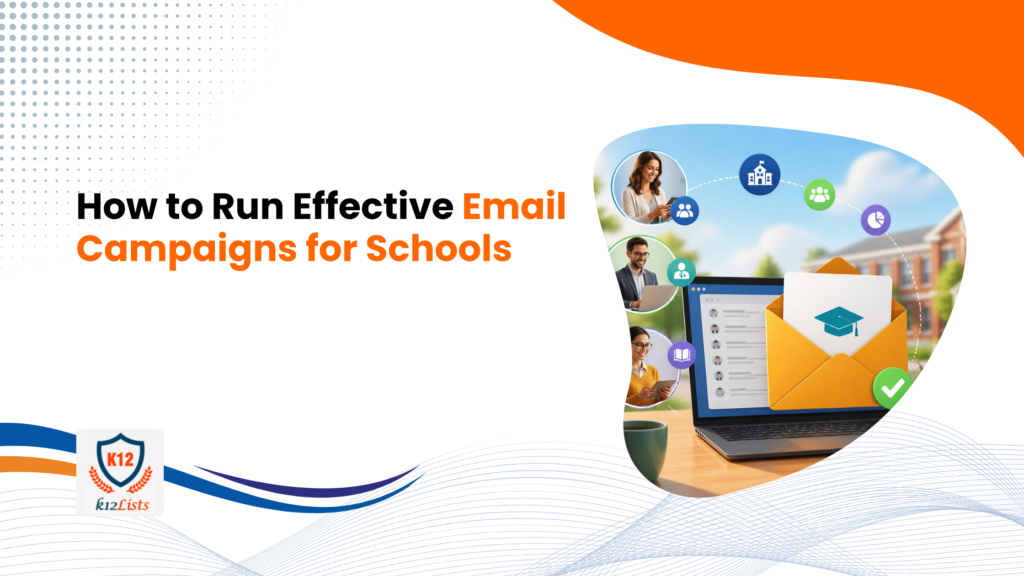
Key Takeaway: The highest-converting email campaigns for schools don’t blast the same message to everyone. They segment by role, school type, and grade level, then send personalized content that actually matters to the person reading it.
First, Know Who You’re Actually Talking To
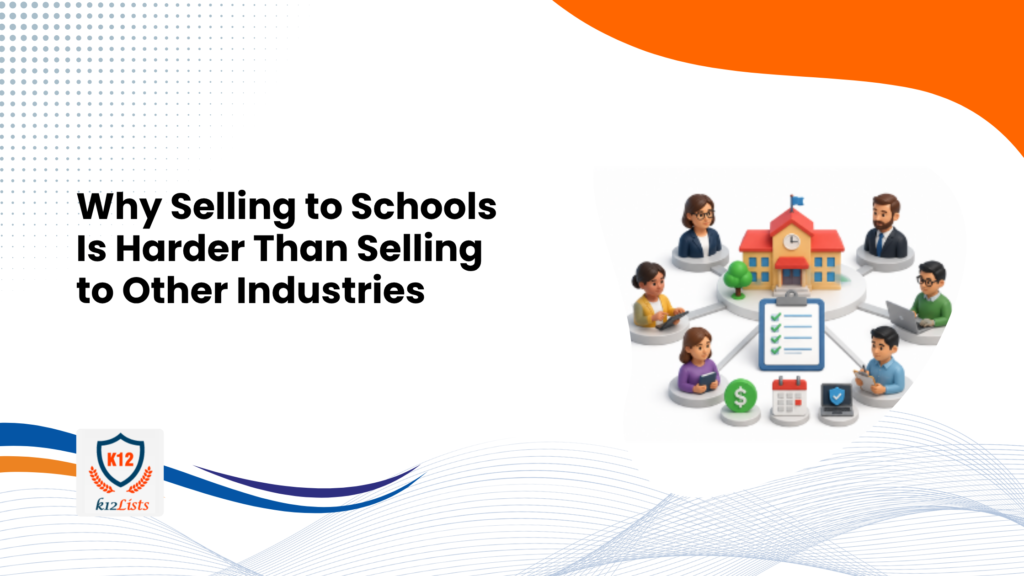
This is where most campaigns go wrong right out of the gate. Schools aren’t a single audience. There are at least three very different groups you need to think about, and each one responds to completely different messaging.
Parents and guardians make decisions based on emotion. They care about student safety, academic outcomes, and enrollment deadlines. And 68% of them read school emails on their phone, per Campaign Monitor (2024). If your email doesn’t look great on mobile, it’s gone.
Teachers and staff are practical. They want professional development, classroom resources, and tools that lighten their load. They’ve been pitched to constantly, so lead with something useful or don’t bother.
Administrators and district leaders hold the budget authority. These principals, superintendents, and IT directors approve purchases and sign contracts. They respond to data and ROI. But according to MDR Education (2024), the average administrator gets 50+ vendor emails weekly. Your message needs to earn attention.
Building a K12 Email List That’s Actually Worth Using
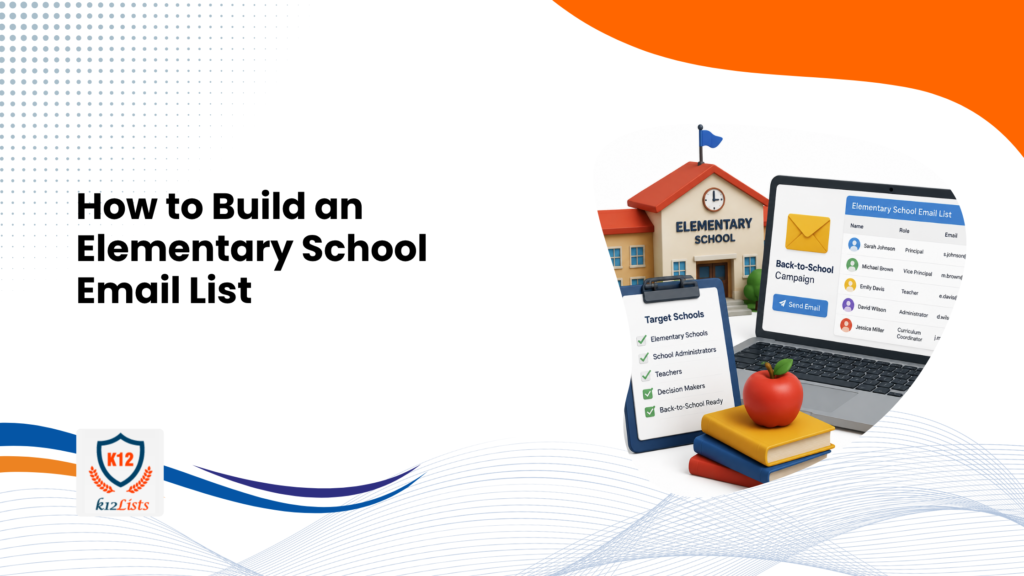
Let’s be honest. A K12 email list full of outdated contacts and unverified addresses isn’t a marketing asset. It’s a liability. Every bounced email chips away at your sender reputation, and once that drops, even your good emails land in spam.
A list that works includes verified email addresses with 95%+ deliverability, accurate job titles, school name and type (public, private, charter), grade levels served, district details, and geographic data down to ZIP code level.
But having this data isn’t enough. The real power comes from how you segment it. Break your list into four layers:
- Role: Parents get enrollment content. Teachers get resources. Administrators get ROI-driven messaging. Mixing these up kills engagement.
- School type: A private school in Boston has different priorities than a rural public school in Kansas. Your emails should reflect that.
- Grade level: What matters to an elementary principal is worlds apart from what keeps a high school superintendent up at night.
- Geography: State education policies, funding models, and even school calendars vary wildly. A one-size-fits-all approach ignores all of that.
Compliance is non-negotiable. Every campaign must follow CAN-SPAM, GDPR (for EU/UK schools), FERPA (no student data), and COPPA. Using a verified, compliance-ready K12 email list takes this worry off your plate.
Writing Emails That People Actually Open
You’ve got about six seconds to convince a school administrator to open your email. That’s it. So let’s talk about what actually works.
Subject lines need to be specific. “3 Ways Texas Districts Are Cutting Admin Costs” will always beat “Important Update for Educators.” Reference their state, their role, or their school type. Make it feel like this email was written for them, because it should be.
Skip the generic greeting. “Dear Educator” tells the reader you didn’t do any homework. Something like “As a middle school principal managing a growing district” shows you actually know who they are.
Put the value up front. Don’t start with who you are. Start with something the reader can use: a statistic, a tip, a free resource. Keep paragraphs to 2-3 sentences. Use bold text and bullet points so scanners still catch the key points.
And please, one call-to-action per email. Don’t ask someone to download a guide, register for a webinar, and book a demo all in the same message. Pick the one action that matters most and make it easy to take.
Campaign Types That Work for Schools
Not every email has the same job. Here are six campaign types that consistently perform well in K-12 email marketing:
Enrollment campaigns target parents during peak enrollment windows, typically January through March. Include virtual tour links, deadline reminders, and testimonials from current families. Keep the tone warm and welcoming.
Event promotions work best as a three-email sequence: announcement, reminder, and last-chance.
Parent newsletters quietly drive re-enrollment year after year by sharing student highlights, upcoming dates, and volunteer opportunities.
Teacher outreach should lead with professional development and classroom tools. Teachers forward useful content to colleagues, giving you free distribution.
Fundraising campaigns perform best when segmented by the donor’s relationship to the school. A current parent and an alumnus need different messaging.
EdTech vendor outreach to administrators needs substance: ROI data, peer case studies, and compliance documentation.
Automate, Measure, and Improve
Sending one email and hoping for the best doesn’t work, especially in education where buying cycles stretch 3 to 9 months. Set up automated sequences: enrollment drip campaigns, event reminders, and re-engagement emails for contacts who’ve gone quiet.
Track what matters. Open rates in education should land between 25% and 30%. Click-through rates should hit 3% to 5%. Bounce rates above 5% mean your list needs cleaning. A/B test subject lines, send times (mid-week mornings tend to win), and CTA placement.
After a few campaigns, your data will tell you exactly which segments engage and which don’t. Use that insight to sharpen your targeting with every send.
How K12 Lists Can Help
K12 Lists provides verified, segmented K-12 email data that helps you reach the right audience with precision. You can target contacts by role, school type, grade level, and location, ensuring your campaigns stay relevant and personalized.
With up to 98% data accuracy, it reduces bounce rates, improves deliverability, and supports compliance. Instead of broad outreach, you can connect directly with decision-makers like principals and administrators.
Want better results from your campaigns? Contact us today for a customized K-12 email list sample.
It All Comes Back to the Data
Every tactic in this guide depends on one thing: the quality of your K12 email list. You can write the perfect subject line and time it perfectly, but if it’s going to the wrong person or bouncing off a dead address, none of it matters.
Verified, segmented K-12 contact data is what turns email campaigns from a guessing game into a growth engine. Better targeting. Higher deliverability. Stronger ROI.
A campaign sent to 1,000 verified contacts will outperform a blast to 10,000 unverified names. Every single time.
Want to see what a targeted K-12 list looks like for your specific campaign?
Contact us today to request a custom sample segmented by role, school type, grade level, and region.
Frequently Asked Question (FAQs)
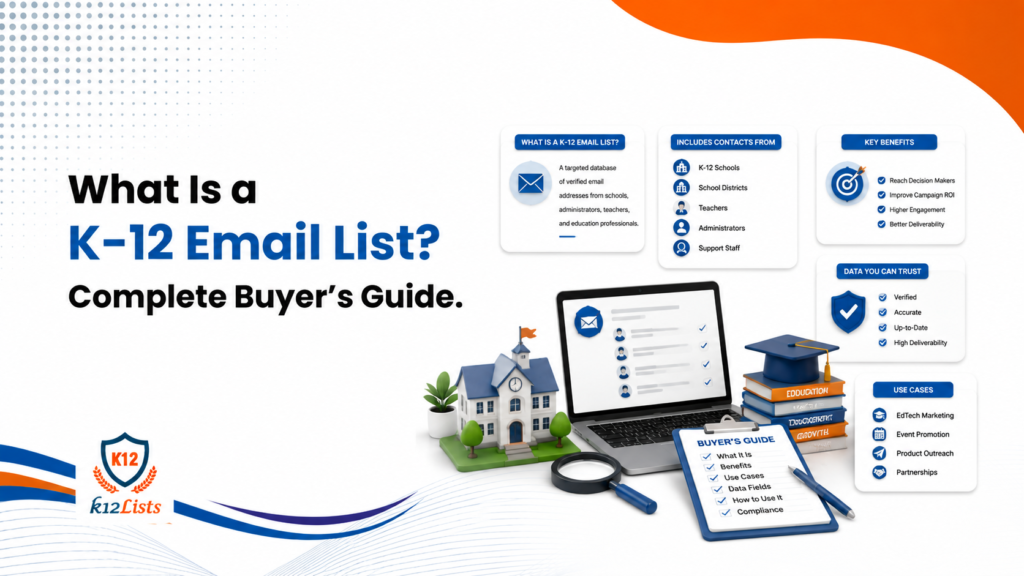
A K12 email list is a verified database of teachers, administrators, and principals. It includes emails, job titles, school names, districts, and location details. Segmentation by role, school type, and location ensures precise targeting.
Segment by job role, school type, grade level, and geography. Layered segmentation boosts open rates by 20–30% compared to unsegmented lists.
Send 2–4 emails per month. Align with the school calendar and avoid breaks or testing periods
K-12 email marketing can return $36 for every $1 spent. Verified, targeted campaigns outperform generic lists by 3-5x.
Verified contacts reduce bounces (<2%), improve inbox placement, and enable personalization. Clean data drives better engagement and ROI.